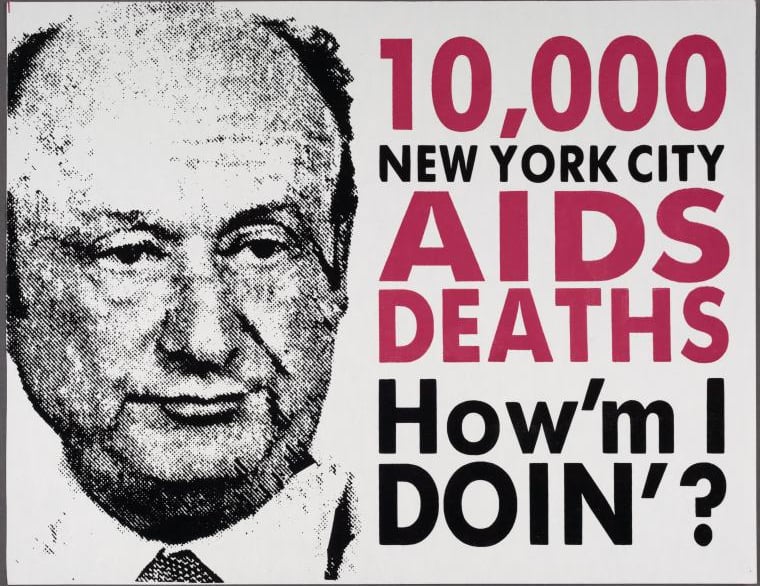
Sources & Further Reading
The resources below provide online access to archives, organizations, and public-history projects central to understanding AIDS, activism, and LGBTQ+ memory in New York City and across the United States. Each link offers a window into the people, places, and movements that shaped both local and national responses to the epidemic.
Historic Sites & Monuments
NYC LGBTQ Historic Sites Project
https://www.nyclgbtsites.org
An award-winning digital archive documenting more than 400 sites connected to LGBTQ+ life across New York City. Each entry combines scholarly research, images, and maps to highlight how urban space reflects the evolution of queer identity, activism, and public memory.
New York City AIDS Memorial
https://www.nycaidsmemorial.org
Dedicated in 2016 at St. Vincent’s Triangle, the memorial honors over 100,000 New Yorkers lost to AIDS and those who cared for them. Its website features architectural details, artist interviews, and educational resources that connect design, grief, and activism in Greenwich Village.
Stonewall National Monument – National Park Service
https://www.nps.gov/ston/index.htm
The first U.S. National Monument dedicated to LGBTQ+ rights, commemorating the 1969 Stonewall Uprising. The NPS portal provides interpretive materials, oral histories, and classroom resources linking the fight for queer liberation to later mobilizations around HIV/AIDS.
Visual AIDS
https://visualaids.org
Founded in 1988, Visual AIDS uses art to fight AIDS stigma and preserve creative legacies. The site hosts the Visual AIDS Archive Project, the Artist Registry, and materials from Day With(out) Art, an annual global day of remembrance through creative action.
Archives & Collections
Fales Library & Special Collections (NYU)
https://library.nyu.edu/locations/fales
The Fales Library’s Downtown Collection chronicles New York’s art and activist movements from the 1970s to the 1990s. The Gay Cable Network Archives document queer media coverage, Pride parades, vigils, ACT UP demonstrations, and interviews with artists and community organizers.
Finding aid: https://findingaids.library.nyu.edu/fales/mss_231/
Leslie-Lohman Museum of Art Digital Collection
https://www.leslielohman.org/
The world’s only museum devoted to LGBTQ+ art. Its digital platform features exhibitions and essays exploring how art, identity, and activism intersected during the AIDS crisis and continue to shape queer visual culture today.
LGBT Community Center National History Archive (NYC)
https://gaycenter.org/archive
A community-based archive preserving photographs, flyers, and oral histories from 1970 to the present. Its digital exhibits highlight local AIDS organizing, grassroots care networks, and cultural resilience in New York’s LGBTQ+ communities.
Fales Library Downtown Collection on AIDS Activism
https://library.nyu.edu/locations/fales/downtown-collection/
Focuses on downtown artists and collectives who transformed grief into protest and performance. The collection preserves ephemera from AIDS activist art, public interventions, and community-based memorial practices.
Online Databases & Global Memorial Projects
AIDS Memorial Database (UNAIDS / NAM)
https://www.aidsmemorial.info/type=physical/page/site.memorials/lang=EN.html
A global directory of physical AIDS memorials and commemorative sites. Entries include images, histories, and geographic data, situating New York’s AIDS memorials within a worldwide landscape of remembrance.
NAMES Project Foundation / AIDS Memorial Quilt
https://www.aidsquilt.org
Founded in 1987, the Quilt remains one of the most powerful grassroots memorials in history. The digital database allows users to search over 50,000 panels memorializing 110,000 individuals, with educational materials and archival timelines tracing its early New York City displays and nationwide journey.
ACT UP Oral History Project
https://actuporalhistory.org/
A video archive of interviews with members of ACT UP New York and other chapters. The project preserves firsthand accounts of activism, healthcare advocacy, and community care that reshaped public health policy and media representation.
New York Public Library Digital Collections
https://digitalcollections.nypl.org/
The NYPL’s digitized holdings include AIDS-era posters, photographs, and manuscripts from the International Gay Information Center Collection and AIDS Activist Video Archive.
Visual AIDS Archive Project
https://archive.visualaids.org/
A searchable digital archive of artists affected by HIV/AIDS, containing thousands of images, bios, and artworks that document creativity, loss, and activism.
Hart Island – City Cemetery / Public Burial Ground
https://www.nyc.gov/site/hartisland/index.page?utm
New York City’s potter’s field since 1869, Hart Island is the burial site of more than a million people—including many who died of AIDS during the 1980s and 1990s. Once operated by the Department of Corrections, the island now falls under the Parks Department. Its history of invisibility, restricted access, and rediscovery embodies the politics of public grief and queer erasure.
Official information:
The Hart Island Project
https://www.hartisland.net
Founded by artist Melinda Hunt in 2011, this nonprofit digital memorial restores the identities of those buried in New York City’s public cemetery. The interactive Traveling Cloud Museum maps over one million graves and records oral histories that rehumanize the forgotten, including hundreds of people who died from AIDS.
National Archives & Memorial Institutions
National AIDS Memorial
https://www.aidsmemorial.org
Designated by Congress in 1996 as the official living memorial to the AIDS epidemic, the National AIDS Memorial in San Francisco maintains both the AIDS Memorial Grove and the AIDS Memorial Quilt. Its digital portal includes a searchable Quilt browser, oral-history projects, and educational initiatives promoting remembrance and social justice.
Library of Congress – AIDS Memorial Quilt Records (Collection AFC 2020/003)
https://www.loc.gov/collections/aids-memorial-quilt-records/about-this-collection/
The Library of Congress preserves more than 150,000 documents and artifacts donated by the NAMES Project, including panel-maker files, letters, and photographs. This digital collection ensures long-term preservation and public access to the Quilt’s historical archive.
Smithsonian National Museum of American History – HIV/AIDS Reference Collection
https://sova.si.edu/record/NMAH.AC.1134
Held by the Smithsonian’s Archives Center, this collection (NMAH.AC.1134) includes public-health materials, activist ephemera, and educational pamphlets from 1975–2019. It provides a national perspective on how science, art, and activism shaped public understanding of HIV/AIDS.
U.S. National Archives and Records Administration (NARA) – HIV/AIDS Collections
https://catalog.archives.gov/search?q=HIV%2FAIDS
NARA preserves federal records documenting the government’s response to AIDS, including CDC and NIH reports, White House correspondence, and HHS policy files. These primary-source materials trace the evolution of U.S. public-health strategy, legislation, and activism from the 1980s onward.
Filmmakers & Media Archives
Jim Hubbard Films
https://www.jimhubbardfilms.com/
Filmmaker and archivist Jim Hubbard has chronicled AIDS activism and queer life in New York since the 1970s. His body of work constitutes an essential primary record of early ACT UP demonstrations, AIDS candlelight vigils, and public protests. His landmark documentary United in Anger: A History of ACT UP (2012) and his essays—such as “AIDS Activist Video and the Evolution of the Archive”—explore how activism and film function as acts of collective remembrance. Hubbard co-founded MIX NYC: The New York Queer Experimental Film Festival and created the AIDS Activist Video Collection at the New York Public Library, ensuring that footage of early demonstrations, vigils, and street actions remains publicly accessible for future generations.
AIDS Memorial Quilt Display, Central Park, 1988 (Primary Source Video)
https://www.youtube.com/watch?v=cAb7c3qNPEE&list=PLyGyftOpOBRI9MC6zVyojAEkPlCTkyFIS&index=3&t=526s
Filmed in 1988 and later uploaded by the original videographer, this primary source video documents an outdoor display of the AIDS Memorial Quilt in New York City, likely in Central Park. The footage captures the Quilt’s emotional impact and the participatory nature of mourning during the height of the epidemic.
Research Portals & Community Projects
OutHistory.org
https://outhistory.org
A public digital-history project documenting LGBTQ+ lives, movements, and spaces across the United States. Many essays and timelines center on New York City, providing essential context for AIDS activism and queer memory.
The AIDS Memorial Instagram Project (@theaidsmemorial)
https://www.instagram.com/theaidsmemorial/
A global digital-memorial community that shares personal tributes to those lost to AIDS. With hundreds of thousands of followers, the project continues the tradition of collective remembrance through storytelling and social media.
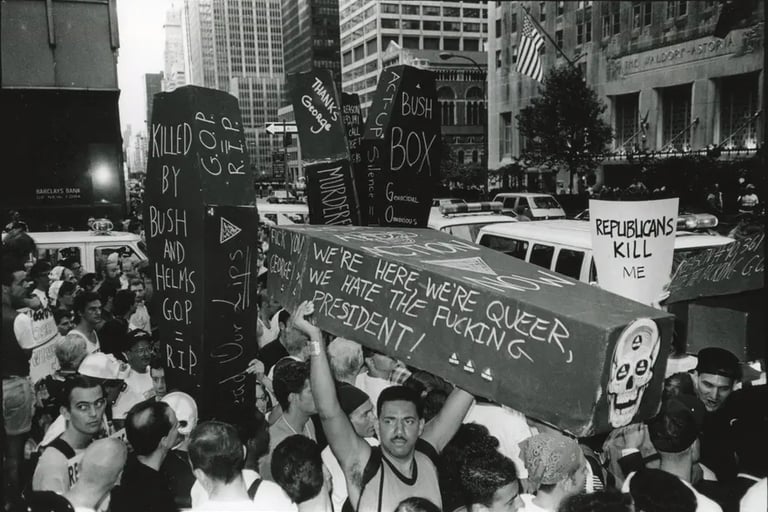
Share Your Story
Your voice matters. If you have memories, photographs, or reflections connected to the AIDS crisis in New York City, we invite you to share them. Together we can preserve these histories and ensure they are never forgotten.